Flag of Puerto RicoA Guide to Puerto Rican Specialty Coffee
What makes a great cup of Puerto Rican coffee?

This guide starts with the basics — what “specialty coffee” actually means and why independent ratings matter — then walks through the highest-rated coffees Puerto Rico has ever produced and, importantly, which ones you can actually buy today. Every claim is tied to a published source.

A glass cup of freshly brewed Puerto Rican coffee in warm sunlight

Only in Puerto Rico

The coffee of popes & kings

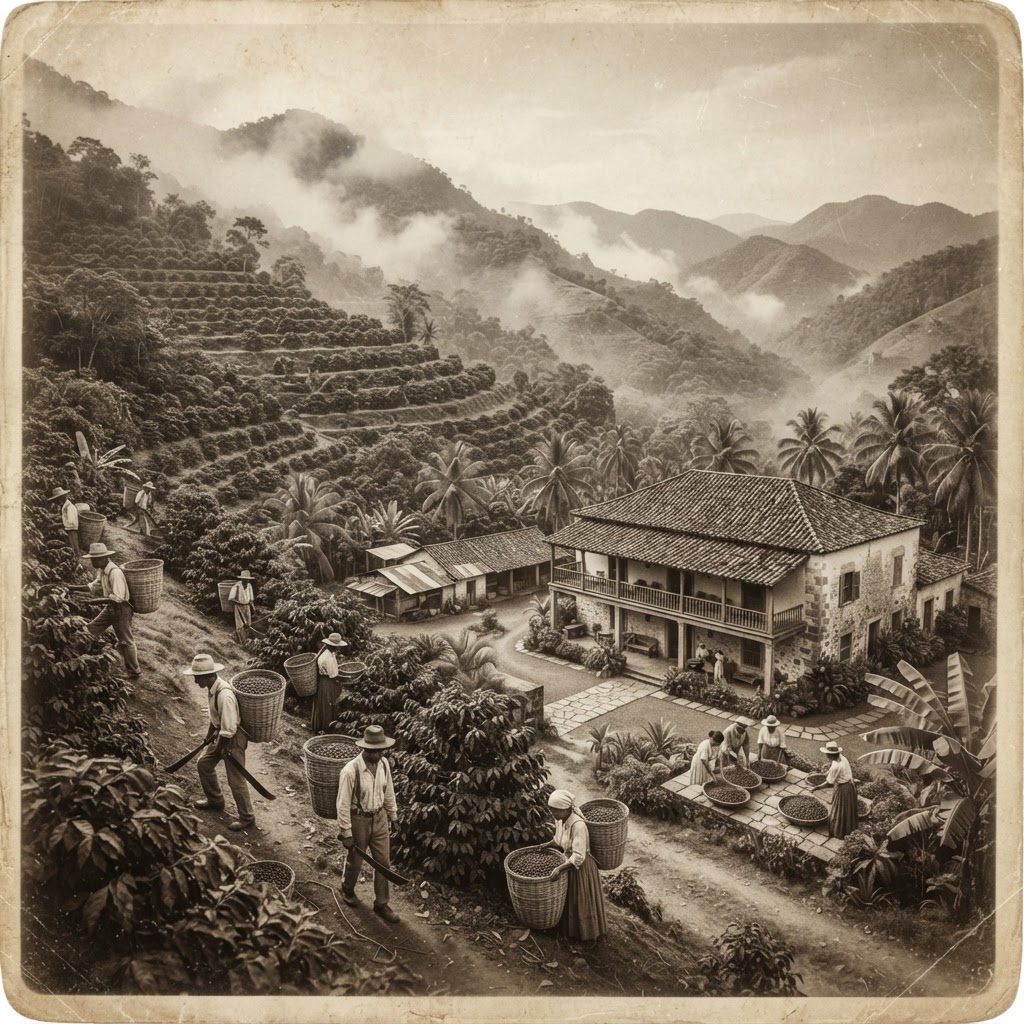
In the 1800s, coffee from Puerto Rico was so prized it was served in the Vatican and in the royal courts of Europe — Puerto Rico was one of the world’s most sought-after coffee origins.

A vintage sepia depiction of a historic Puerto Rican mountain coffee hacienda

Heritage

The coffee once served to the Pope

In the 1800s, Puerto Rican coffee from the mountains of Yauco and Lares was among the most prized in the world — poured in European royal courts and, famously, at the table of Pope Leo XIII. It was known as a “coffee of popes and kings.”

Read the full history

The landscape at a glance

What’s for sale, what’s rated, and what rates highest

Before we look at the top coffee in detail, here is the full field in one place. Two things matter and they are not the same: can you actually buy it and has it earned an independent score. Only a handful of Puerto Rican coffees have both.

16

coffees you can buy today (for sale or intermittently)

2

with a published independent Coffee Review score

Certified & independently verified

Every numeric score shown here is properly documented and verified as originating from Coffee Review, the leading independent coffee-cupping authority. Where a coffee is designated specialty coffee without a published rating, that classification has likewise been verified against the cited sources.

See all sources

How to read this: on bean origin, we use three tags: 100% Puerto Rican beans means verified island-grown (single farm or region); Contains imported beans flags brands confirmed to blend in coffee from Mexico, Colombia, or elsewhere; and Origin not verified marks mass-market brands whose sourcing we could not confirm either way. The Regenerative tag flags farms with a verified regenerative, pesticide-free practice — here's why that matters. The one coffee that is both top-rated and readily for sale — Café Quinto Cielo — is what we look at next.

The highest-rated coffees & how to buy them

Puerto Rico’s rated coffees, one at a time

These are the independently rated Puerto Rican coffees you can actually buy today — ordered from highest rated down. Each entry says plainly where to get it and whether stock is steady or comes and goes.

No. 1
93/100

Café Quinto Cielo

For sale now100% Puerto Rican beans

Fifth Heaven Coffee

Hacienda Tierra Viva · Utuado

Grown, processed, and roasted on the farm from Limaní and Frontón trees. This is both the best-rated Puerto Rican coffee on record and one you can actually buy.

On the score: The highest score ever awarded to a Puerto Rican coffee, and top-rated two years running (2025–2026). Two separate Café Quinto Cielo coffees — a Medium Roast and a Dark Roast — have each earned 93 points from Coffee Review.

Origin: 100% Puerto Rican beans — single origin, grown, dried (red cherry) processed, and roasted in Utuado.

Baking chocolateCashew butterRed appleMagnolia

Natural · grown regeneratively, pesticide-free

Availability

Sold directly through the Hacienda Tierra Viva farm shop and select retailers.

Buy onlinehaciendatierraviva.comCoffee Review source

Where to buy in person

No. 2
85/100

Yauco Selecto

Limited / intermittent100% Puerto Rican beans

Yauco region (licensed brand)

For years the most internationally recognized Puerto Rican coffee, prized for a balanced, full-bodied, chocolate-and-spice cup. Today it is a licensed regional brand rather than a single farm.

On the score: Scored 81–85 across several Coffee Review evaluations (1998–2007) — the classic name that put Puerto Rican coffee on the specialty map.

Origin: Traditionally 100% Puerto Rican beans from the Yauco region. Because it is now a licensed brand, check the current packaging to confirm the beans are still island-grown.

ChocolateSpiceFull bodyBalanced

Washed · traditional regional blend

Availability

Intermittently available.

Buy onlineCoffee Review source

Specialty coffees without a published score

Specialty coffees that aren’t rated

These are single-origin and farm-direct Puerto Rican coffees we consider specialty grade, but that don’t carry an independent Coffee Review score — so no number is assigned. Tap any one to see the details and where to buy it.

The everyday brands & where to find them

Commercial coffee, one at a time

These are the mass-market, everyday supermarket brands. None carries an independent Coffee Review score, so no number is assigned — but they are widely available and part of the island’s daily coffee culture. Each entry says plainly where to get it.

CommercialNo independent score

Café Crema

For sale nowContains imported beans

Café Crema

An accessible, creamy and smooth everyday coffee — a mass-market household staple rather than a specialty micro-lot, and not a 100% Puerto Rican coffee.

Positioning: Everyday staple

Origin: Not 100% Puerto Rican. Café Crema is a high-volume blend built largely on imported beans that are roasted and packaged on the island — a "Hecho en Puerto Rico" product, not an island-grown one. The brand does not disclose specific origins, but Puerto Rico imports most of its green coffee from Mexico.

CreamyMildSmooth

Medium

Availability

A mass-market supermarket staple, widely stocked across the island.

Buy onlineSource

Where to buy in person

CommercialNo independent score

Café Lareño

For sale nowContains imported beans

Café Lareño

A classic brand from the coffee town of Lares, offering ground and whole-bean lines including Selección Especial and a shade-grown (Bajo Sombra) coffee. A regional favorite rather than a specialty micro-lot. Note: we found no independent cupping score, so no number is assigned.

Positioning: Traditional mountain-town brand

Origin: Depends on the product line. The Selección Especial is marketed as 100% Puerto Rican Arabica, but other Café Lareño lines (such as the larger 5 lb bags) explicitly contain a blend of Puerto Rican and imported beans. The brand does not name the imported origins, but Puerto Rico imports most of its green coffee from Mexico. Check the specific package for "100% café de Puerto Rico."

BalancedSmoothTraditional

Medium

Availability

Sold through Puerto Rican coffee retailers such as Puerto Rico Coffee Hub and El Colmado.

Buy onlineSource
CommercialNo independent score

Café Lealtad

For sale now100% Puerto Rican beans

Café Lealtad

A Lares brand inspired by its historic plantation heritage, with a traditional profile and a separate Kosher-certified line. A regional favorite rather than a specialty micro-lot. Note: we found no independent cupping score, so no number is assigned.

Positioning: Heritage plantation brand

Origin: 100% Puerto Rican beans — a single-origin coffee grown in the Lares region.

TraditionalSmoothBalanced

Medium

Availability

Sold through Puerto Rican coffee retailers such as Puerto Rico Coffee Shop and El Colmado.

Buy onlineSource
CommercialNo independent score

Café Rico

For sale nowOrigin not verified

Café Rico

Known for a bold, strong flavor profile, frequently cited as the classic choice for drinkers who prefer a more robust cup.

Positioning: Everyday staple

Origin: Not confirmed 100% Puerto Rican. As a mass-market brand it may be a blend that includes imported beans; look for a "100% café de Puerto Rico" label to be sure.

BoldStrongRobust

Dark

Availability

A mass-market supermarket staple, widely stocked across the island.

Buy onlineSource

Where to buy in person

CommercialNo independent score

Café Yaucono

For sale nowOrigin not verified

Yaucono

The most popular everyday brand on the island, favored for a balanced, smooth and traditional medium-dark roast. The cup many Puerto Rican households grew up on.

Positioning: Most popular everyday brand

Origin: Not confirmed 100% Puerto Rican. As a high-volume everyday brand it may be a blend that includes imported beans; look for a "100% café de Puerto Rico" label to be sure.

SmoothBalancedTraditional

Medium-Dark

Availability

The island’s best-selling everyday brand, widely stocked in supermarkets.

Buy onlineSource

Where to buy in person

Start here

What is specialty coffee?

“Specialty coffee” is not a marketing adjective. Since 2021, the Specialty Coffee Association (SCA) defines it as “a coffee or coffee experience recognized for its distinctive attributes, and because of these attributes, has significant extra value in the marketplace.” This replaced the old rule that a coffee simply had to score 80+ on a 100-point cupping scale. Quality is now judged through the Coffee Value Assessment (CVA) — a multi-part framework that weighs physical, descriptive, affective (taste), and extrinsic attributes rather than a single pass/fail number.

Cupping scores are still widely used in the trade as a practical reference — the 80-point mark remains a common shorthand for “specialty grade,” and 90+ is rare and exceptional — but under the current SCA definition a score alone no longer decides whether a coffee is specialty.

2021

Attributes, not a cutoff

The SCA now defines specialty by distinctive attributes and the extra market value they create — not by clearing a single 80-point score.

CVA

Coffee Value Assessment

The current framework judges a coffee across physical, descriptive, affective (taste), and extrinsic attributes for a fuller picture of quality.

80+

Still a useful shorthand

Cupping scores remain a common trade reference: 80+ signals specialty grade in practice, and 90+ is rare and exceptional — but a score alone is no longer the definition.

Why do ratings matter?

Almost every coffee bag calls itself “premium,” “gourmet,” or “the finest.” Those are the seller's own words. An independent rating is different: a neutral expert tastes the coffee blind and assigns a number that can be compared across origins, roasters and years.

For a small origin like Puerto Rico, that matters even more. A verified score separates coffees that genuinely compete on the world stage from those that simply market themselves well — and it gives farmers doing exceptional work the recognition (and price) they've earned. It's the difference between a story and proof.

The source we rely on

Why Coffee Review?

Founded in 1997 by Kenneth Davids and Ron Walters, Coffee Review is one of the most influential and widely cited coffee-rating publications in the world. It was among the first to apply the familiar wine-style 100-point system to coffee, giving drinkers everywhere a consistent way to judge quality.

Its reviews are conducted by professional tasters, typically blind— the cuppers evaluate the coffee in the cup before knowing the roaster or price, so the score reflects what's actually there, not the brand or the marketing. That independence is exactly why a Coffee Review number carries weight internationally, and why we treat it as the authority for this guide.

Visit Coffee Review
  • Independent

    Coffees are evaluated on their merits by expert reviewers, so a high score reflects cup quality rather than an advertising relationship.

  • Blind cupping

    Tasters assess aroma, flavor, acidity, body, and aftertaste before knowing the coffee’s identity — removing brand bias from the number.

  • A global benchmark

    Because the same 100-point method is applied across origins worldwide, a Puerto Rican coffee’s score can be compared directly to coffees from Ethiopia, Colombia, or Panama.

It isn’t the only yardstick

Other places coffee quality gets measured

Coffee Review is the only source that has published 100-point scores for the specific Puerto Rican coffees named here, which is why our numbers come from it. But it is not the only credible way coffee quality is judged — these are the other benchmarks worth knowing, some of them specific to the island.

  • La Taza de Oro

    Puerto Rico

    Puerto Rico’s own annual quality competition, organized through the University of Puerto Rico at Mayagüez and its Agricultural Extension Service. Certified Q-graders blind-cup farm lots to crown the island’s top harvests each year.

    About UPRM Ag Sciences
  • Coffee Quality Institute (Q grading)

    CQI licenses the Q-grader credential — the certification most professional cuppers hold. A Q-grade uses a standardized protocol, so an 84+ specialty score means the same thing in Puerto Rico as anywhere else.

    Visit Coffee Quality Institute
  • SCA Coffee Value Assessment

    The Specialty Coffee Association’s current framework (adopted after its 2021 attributes-based redefinition) evaluates coffee across physical, descriptive, affective, and extrinsic attributes. The classic 100-point cupping score lives on inside it as a widely used reference, where 80+ is the common shorthand for specialty grade.

    Visit the SCA
  • Cup of Excellence

    The most rigorous international competition and auction for single-origin coffees. Puerto Rico does not currently take part, but it is the global benchmark island producers are increasingly measured against.

    Visit Cup of Excellence

Why we still lead with Coffee Review: competitions like La Taza de Oro score anonymous farm lots rather than the retail brands you can buy, and their results aren't published as a permanent, per-brand 100-point number. Coffee Review remains the one source offering a public, comparable score attached to a coffee you can actually order.

Reading the label

What “Hecho en Puerto Rico” really means

Many bags of coffee sold on the island proudly say “Hecho en Puerto Rico” — literally, “Made in Puerto Rico.” It sounds like a promise that the coffee inside was grown on the island. Often, it isn't.

What shoppers assume

“The coffee was grown here.”

The natural reading of “Made in Puerto Rico” is that the beans were cultivated, harvested, and produced on Puerto Rican farms — a true single-origin island coffee.

What it can actually mean

“It was partly processed here.”

For many brands, green beans are imported from other countries and then only roasted, blended, ground, or packaged in Puerto Rico. That final step of processing is enough for the label — even though the coffee itself wasn't grown on the island.

So where does that imported coffee come from?

Overwhelmingly, Mexico. Puerto Rico's own harvest has fallen far short of what islanders drink, so roasters bring in green and semi-roasted beans — the bulk of it Mexican Arabica — then roast, blend, and package it locally before it reaches the shelf as a “Puerto Rican” coffee. Larger operations such as Puerto Rico Coffee Roasters have openly built their supply around imported Mexican beans, and even island roasters like 787 Coffee sell blends that mix Puerto Rican, Mexican, and Colombian coffee.

Source: Reuters — reporting on Puerto Rico’s reliance on imported coffee.

A familiar marketing pattern

This is the same sleight of hand you see across the wider American market. A product “assembled in the USA” from imported parts, coffee “roasted in Brooklyn” from beans grown a hemisphere away, or food “packaged” locally — the place named on the front of the box is where the last step happened, not necessarily where the thing actually comes from. “Hecho en Puerto Rico” on a coffee bag works exactly the same way.

How to know you’re buying true island-grown coffee

If growing the coffee in Puerto Rico matters to you, don’t rely on “Hecho en Puerto Rico” alone. Look for more specific wording:

  • “100% café de Puerto Rico” / “100% Puerto Rican coffee”The clearest promise that every bean was grown on the island.
  • A named farm, hacienda, or region (e.g. Yauco, Adjuntas, Jayuya)Single-origin and single-estate coffees are grown where they say they are.
  • “Cultivado” / “grown in Puerto Rico” — not just “hecho” or “empacado”“Cultivated” refers to farming; “made” or “packaged” can refer only to processing.

This is exactly why the chart above separates a 100% Puerto Rican tag from a May be a blendtag — so the origin question is answered before the label ever gets a chance to blur it.

How we handled the data

What counts as “rated”

There is no official ratings feed for Puerto Rican coffee. Rather than invent numbers, we separated what is verifiable from what is only descriptive.

  • 01

    Verified scores only

    A coffee is only shown with a number if an independent panel (Coffee Review) published one — namely Café Quinto Cielo (93) and Yauco Selecto (85).

  • 02

    Profiles, not guesses

    Every other brand gets a qualitative profile from producer sites and press — with no numeric score attached, because none exists.

  • 03

    No invented rankings

    Unscored profiles are listed alphabetically, not ranked, so ordering never implies a measurement we did not make.

  • 04

    Everything is cited

    Each score and profile links to its source, and the full source list is published at the bottom of this page.

The science of clean coffee

What a regenerative farm is — and why pesticides belong nowhere near your coffee

Coffee grown regeneratively and without pesticides is not a marketing flourish — it reflects a growing body of peer-reviewed evidence that how coffee is farmed affects both your health and the living systems around the farm. Rebuilding soil, protecting water, and keeping synthetic chemicals out of the cup is one of the most meaningful choices a coffee farm can make.

How much coffee is grown with pesticides?

Coffee is one of the most chemically treated crops in the world. Roughly 96% of the coffee produced globally is grown conventionally — where synthetic pesticides and herbicides are permitted — while only about 4% is certified organic and grown free of them.

96% · Conventionally grown

Synthetic pesticides &/or herbicides permitted

4% · Certified organic

Grown without synthetic pesticides or herbicides

A note on the numbers: the ~4% organic figure reflects certified organic production; some farms (including regenerative ones like Café Quinto Cielo) grow without synthetic chemicals but aren’t formally certified, so the truly pesticide-free share is somewhat higher. Conversely, "conventional" means chemicals are permitted, not that every bag carries detectable residue — roasting degrades much of what remains.

What is a regenerative farm?

A regenerative farm treats the land as a living ecosystem to be improved, not a resource to be spent. Instead of clearing land and replacing natural fertility with synthetic fertilizers and sprays, it works with nature to rebuild soil, water, and biodiversity. In practice, that rests on a few core ideas:

Living, uncovered soil

Composting, cover crops, mulch, and minimal tillage rebuild organic matter so the soil holds water, feeds the plant, and stores carbon instead of eroding away.

Biodiversity as pest control

A shaded canopy, mixed planting, and preserved habitat invite the birds, insects, and microbes that keep pests in check naturally — so synthetic sprays become unnecessary.

No synthetic pesticides or herbicides

Weeds and pests are managed with integrated, biological methods. Nothing synthetic is applied to the plant, the soil, or — ultimately — the cup.

Regeneration, not extraction

The goal is to leave the land healthier every season: more fertile soil, cleaner water, and a more resilient farm, rather than depleting it for a single harvest.

Why pesticides and herbicides are a problem

The harm runs in two directions at once: into the person drinking the coffee, and out into the land, water, and ocean around the farm.

In your cup — human health

  • Herbicides such as glyphosate can leave residues on green coffee when applied near harvest, and glyphosate is classified by the WHO’s cancer agency as "probably carcinogenic to humans."
  • Chronic dietary exposure to pesticide residues is associated in the literature with cancers, endocrine (hormone) disruption, and neurological and reproductive harm.
  • Choosing farm-direct, pesticide-free coffee is the most direct way to keep these residues out of what you drink every day.

In the land, water & ocean

  • Only a small share of any sprayed pesticide hits its target; the rest settles into soil, leaches into groundwater, and runs off into rivers.
  • That runoff sharply reduces aquatic biodiversity — one study found up to a 42% loss of invertebrate species in affected streams.
  • Agricultural chemicals ultimately reach the ocean, where herbicides can suppress the phytoplankton that underpin the marine food chain and produce much of our oxygen.

The peer-reviewed evidence

Every claim above is drawn from published, peer-reviewed research and authoritative bodies. Read the full list of studies, each linked to its original source.

The peer-reviewed evidence

Clean & Regenerative Farming

How to buy coffee from clean farms

Coffees should be grown regeneratively and without pesticides. Healthy soil and biodiversity make better coffee and provides for a cleaner ecosystem. Here is what regenerative farming means and how to shop for it.

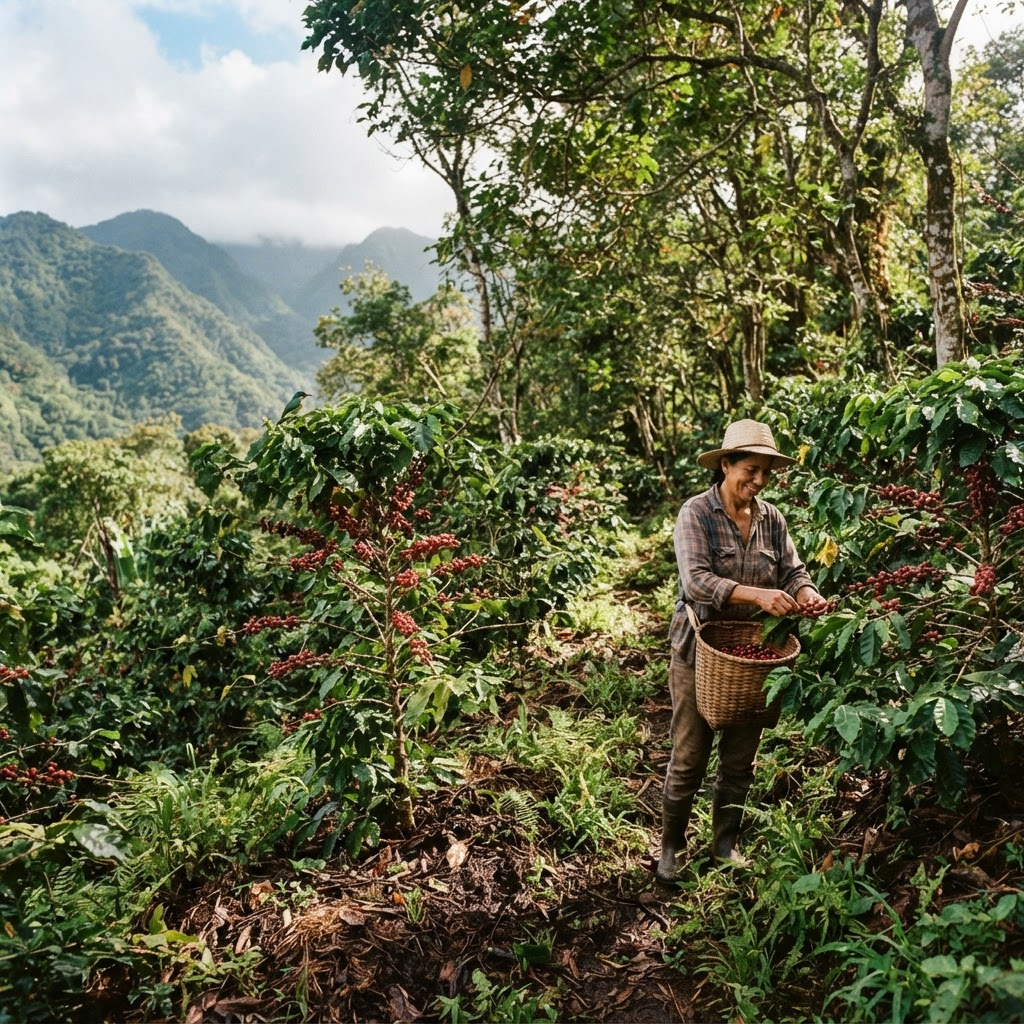
A shade-grown regenerative coffee farm on a Puerto Rican mountainside

Agroforestry & shade canopy

Coffee is grown under a multi-layered canopy of native trees rather than in cleared, sun-exposed rows. Shade protects soil, supports birds and pollinators, and slows ripening for better flavor.

Healthy living soil

Composting, cover crops, mulching, and reduced tillage rebuild organic matter, retain water, and sequester carbon instead of depleting the land.

No synthetic pesticides

Integrated pest management uses biodiversity, natural predators, and careful monitoring in place of synthetic pesticides and herbicides — keeping chemicals out of the cup and the watershed.

Biodiversity first

Mixed planting and preserved habitat keep the farm ecosystem resilient, reducing the need for chemical inputs and protecting migratory bird populations.

Certifications to look for

  • Regenerative Organic Certified (ROC)Source

    The highest bar: requires USDA Organic as a baseline, then adds soil health, animal welfare, and farmer-fairness standards.

  • USDA OrganicSource

    Prohibits synthetic pesticides and fertilizers. A common baseline that most stricter certifications build on.

  • Smithsonian Bird FriendlySource

    Requires organic certification plus strict, multi-layered shade-canopy cover to protect bird habitat.

  • Rainforest AllianceSource

    Focuses on biodiversity, sustainable land use, and improved conditions for farm communities.

A quick buyer’s checklist

  • 1Look for a certification seal (ROC, USDA Organic, Bird Friendly, or Rainforest Alliance) on the bag.
  • 2Favor shade-grown and single-origin or farm-direct coffee, where practices are traceable.
  • 3Read the roaster or farm site for words like "regenerative," "pesticide-free," and "natural pest management."
  • 4Buy from producers who name the farm so claims can be verified.
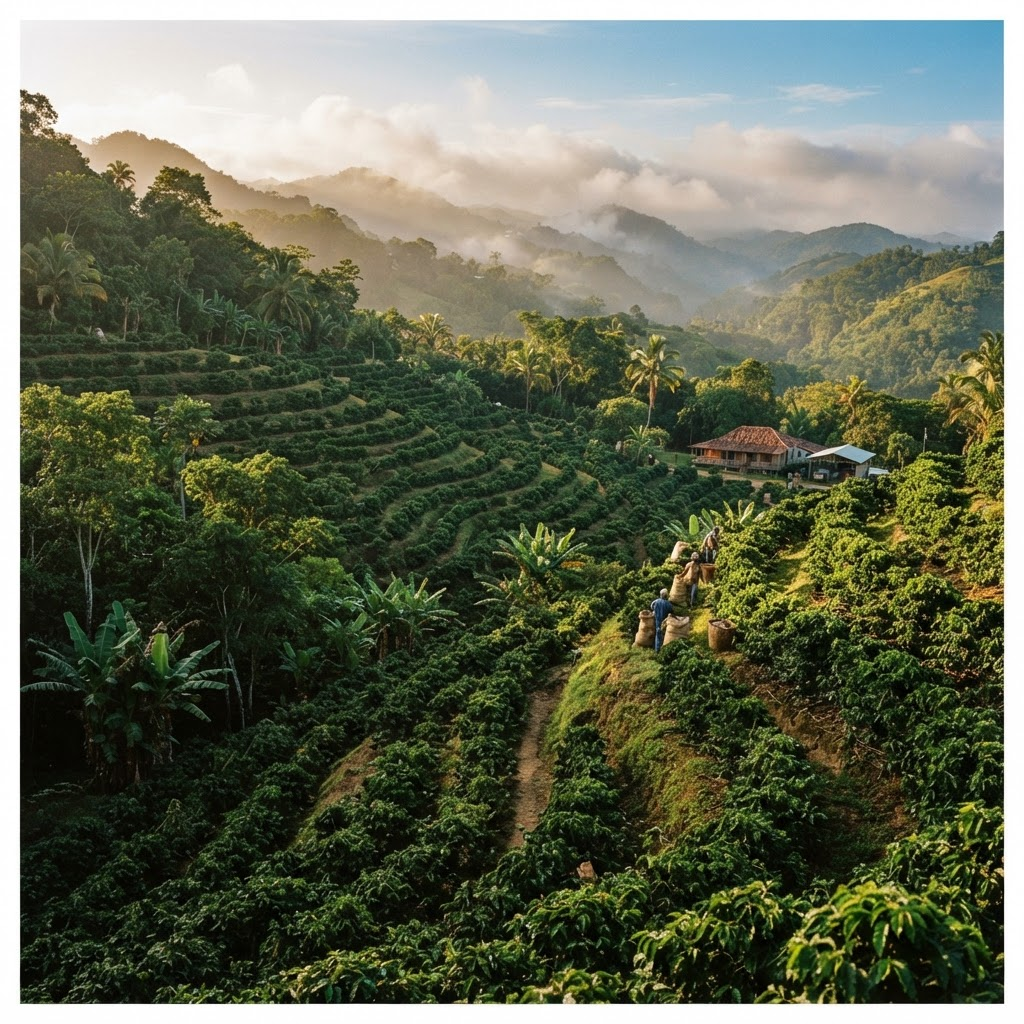
Terraced coffee farms on the misty mountains of central Puerto Rico

Where it grows

Born in the cordillera

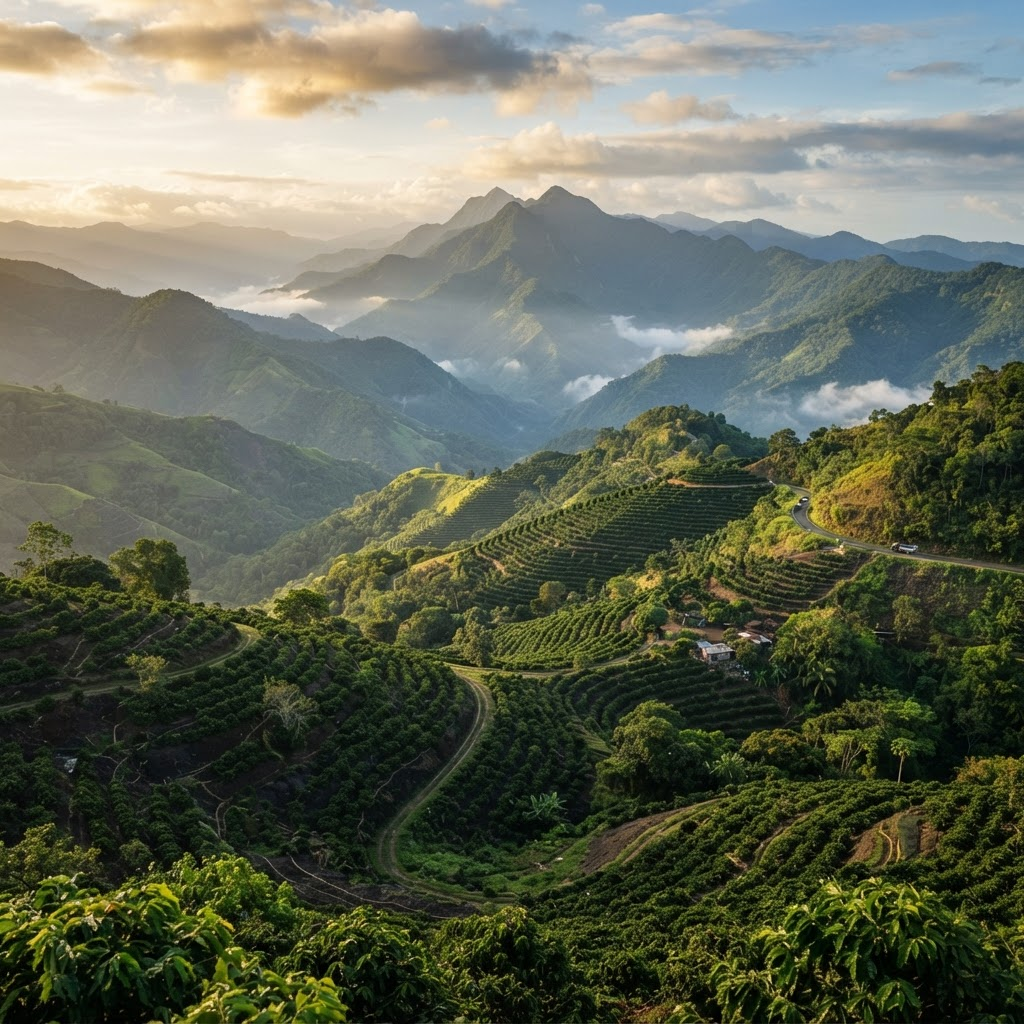
Puerto Rico's best coffee comes from the cool, misty peaks of the Cordillera Central. High elevation slows the cherry's maturation, concentrating sweetness and producing the smooth, low-acid cups the island is famous for.

  • Lares

    High-altitude western highlands; home of the super-premium Alto Grande tradition.

  • Yauco

    The historic south-central name behind Yauco Selecto, known for full-bodied cups.

  • Adjuntas

    Cool mountain town above 3,000 ft producing clean, balanced specialty micro-lots.

  • Jayuya

    The island’s central peak country; velvety, sweet coffees from historic haciendas.

Where to sip it

Specialty coffee shops

Prefer to taste before you buy? These are cafés and roasters across Puerto Rico pouring genuine specialty coffee. Choose a region to narrow the list, then tap a shop to find it on the map.

Citations

Sources

Every figure and profile on this page traces back to one of the sources below. Independent reviews are the only source of numeric scores; producer sites and press provide qualitative profiles only.

Peer-reviewed research

Note: Coffee Review scores are indexed via its site search, as the publication's individual review URLs change over time. Producer descriptions reflect marketing claims from the brands themselves and have not been independently verified.